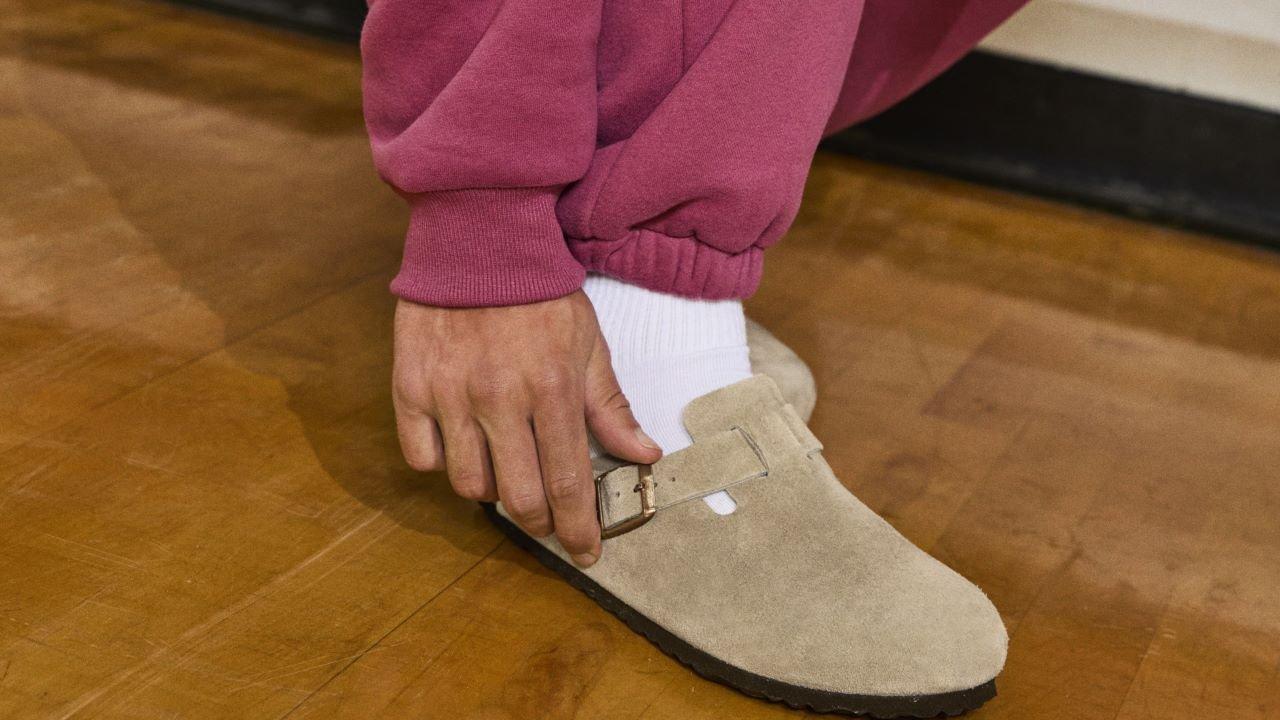
Birkenstocks have literal centuries of history. It was in 1774 that Johann Adam Birkenstock, yes, that’s his actual name, cobbled the first Birkenstock. Since then, the shoe has only improved, and the biggest reason Birkenstocks have remained popular through the decades isn’t just style — it’s biomechanics.
The classic Birkenstock construction uses a cork-latex footbed, and it behaves differently from foam or rubber sandals. Instead of cushioning only, it shapes itself to your foot over time. Think of it less like stepping onto a pillow and more like standing on perfectly molded, supportive ground.
These are the key Birkenstock footbed benefits:
- Deep heel cup stabilizes your foot when walking
- Arch support helps reduce fatigue
- Toe bar lets your toes move naturally and independently
- Shock-absorbing cork reduces joint pressure
This design is why you’ll often see positive Birkenstock podiatrist reviews. Podiatrists tend to recommend them for everyone, but especially people with flat feet, plantar fasciitis, arch pain or foot fatigue from long hours on their feet. They’re not a medical device, but they act sort of like a customized orthopedic shoe because they mold to your feet.
For example, the classic flip-flop forces your toes to grip with every step, which strains tendons. Birkenstocks do the opposite. They support your foot so your muscles don’t overwork.
It takes some time, but after wearing them for a few weeks, you may stand straighter and walk with a longer stride. That’s the effect of the sandal’s footbed aligning your foot.