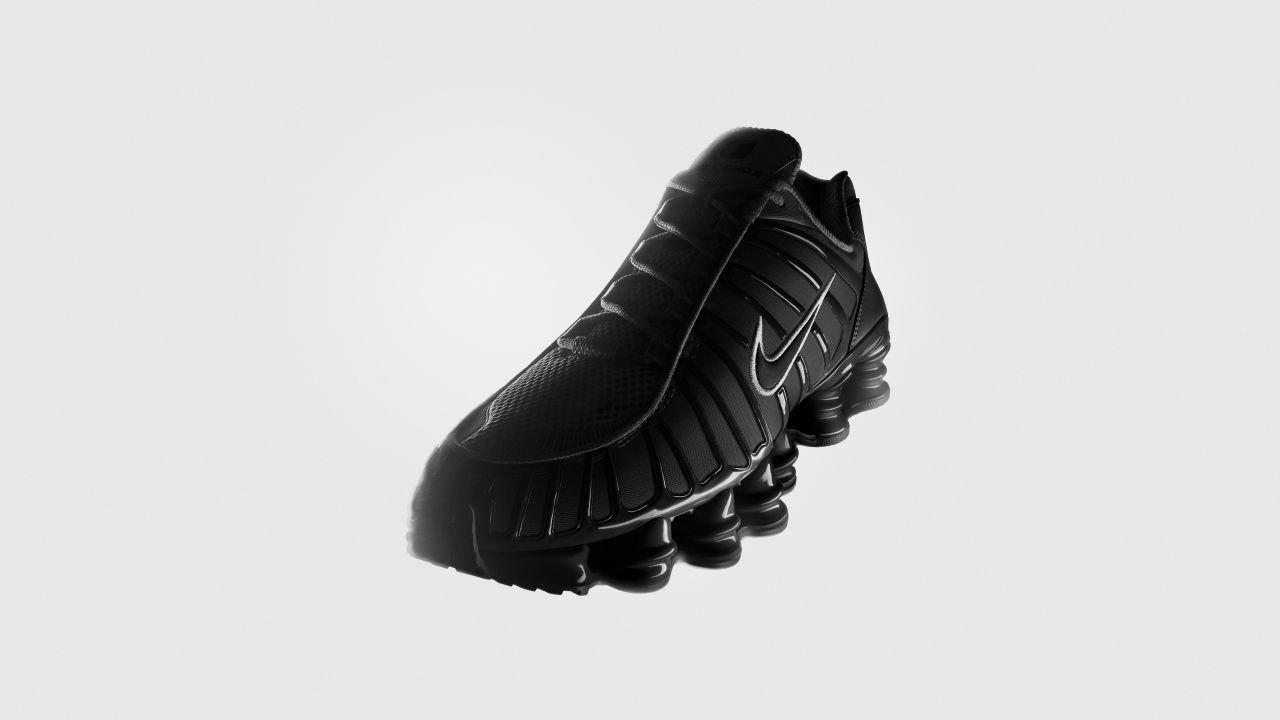
With mechanical cushioning and a notable height boost, Nike Shox were originally made for basketball players and runners who wanted to soften their step and give themselves an extra advantage. The core feature of these street-style sneakers is their mechanical cushioning systems, nicknamed "shocks," that provide a spring-back feel with every step.
Rather than using traditional foam or Nike Air technology, these shoes feature flexible yet durable foam pillars. These pillars or "pucks" are squeezed between moderator plates to absorb impact and return some of that energy whenever the foot presses down. They essentially act as massive springs in each foot, providing extra bounce while minimizing the impact of running on pavement or other hard surfaces.
The first pair of Shox, the Nike Shox R4, debuted in 2000 after 16 years of research and development. Air Force 1 designer Bruce Kilgore began the project in 1984, aiming to optimize energy return by combining shoe design practices with engineering. The prototypes used steel springs in the midsole and leaf springs in the heel before the design team experimented with high-density polyurethane foam pillars in the late '90s.
This 16-year history is a testament to how advanced Nike Shox sneakers really are. In the years since, the mechanical cushioning system has evolved even more, alongside the shoes' now-iconic style. Nike Shox eventually adopted a sleeker, low-profile silhouette and collaborations with big fashion houses have brought it back to the forefront of both street and luxury fashion culture.